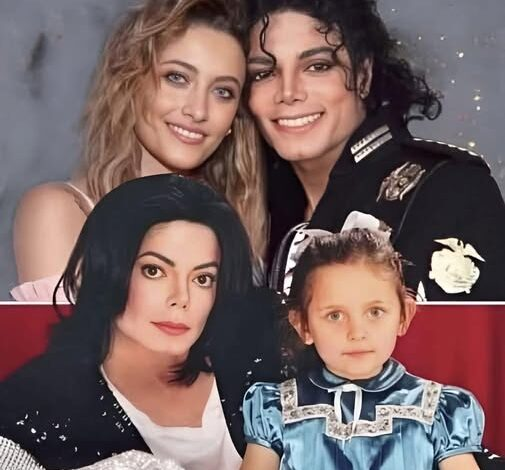
For most of her life, Paris Jackson has lived inside a conversation she never asked to join. It is a conversation about legacy, controversy, genius, damage, and myth—one that has followed her since childhood and revolved endlessly around her father, Michael Jackson. To the world, he was a global phenomenon, an untouchable symbol of pop culture whose influence reshaped music, fashion, and performance. To Paris, he was something far simpler and far more complicated: her dad.
For years, she stayed largely silent while documentaries were released, accusations resurfaced, debates reignited, and public opinion fractured again and again. People argued over who Michael Jackson was as if he were an idea rather than a human being. Paris watched it happen knowing that no version of him presented on screen or in headlines fully resembled the man she knew behind closed doors. When she finally chose to speak, her words were not explosive, defensive, or performative. They were restrained, deeply personal, and quietly devastating in their honesty.
She did not attempt to rewrite history or demand belief. Instead, she offered something the public conversation had long lacked: humanity.
Paris spoke about a father who existed far away from stadium lights and screaming crowds. She remembered a man who made breakfast, who worried constantly about his children’s safety, and who tried—sometimes desperately—to shield them from the machinery of fame that had consumed his own childhood. Masks and guarded gates were not theatrics, she explained, but protection. He knew too well what happens when a child grows up without privacy, without choice, without the freedom to be ordinary.
She described his life not as a fairy tale of success, but as a series of sacrifices layered with impossible expectations. From the time he was a boy, perfection was not encouraged—it was demanded. Mistakes were punished. Vulnerability was a liability. Fame arrived early and never loosened its grip. Paris spoke about how that pressure followed him into adulthood, shaping both his brilliance and his pain. The world celebrated the results while rarely acknowledging the cost.
When addressing the controversies that still surround his name, Paris did not lash out. She did not accuse or condemn those who believe differently. Her response was measured, almost painfully calm. “Everyone has their truth,” she said. “But I knew my father’s heart.” It was not a declaration meant to convince skeptics. It was a boundary—a reminder that public narratives do not erase private realities.
Losing him at just eleven years old fractured her world in ways she is still learning to articulate. Grief did not unfold quietly or privately. It happened under relentless scrutiny, with cameras capturing moments that should never have belonged to anyone but a child. She has spoken openly in the past about how that loss nearly destroyed her, how she struggled with identity, mental health, and the unbearable weight of carrying a name the world refuses to let rest.
Survival, she says, became an act of loyalty. Not to the legend, but to the man who taught her to lead with kindness when the world is cruel, to choose art over argument, and to refuse bitterness even when surrounded by noise. Music became her language, not as imitation, but as expression. Advocacy became her grounding, not as performance, but as purpose. Healing, she admits, is ongoing.
What surprised many was what she did not say. She did not frame her father as flawless. She did not deny his complexity or his contradictions. “He wasn’t perfect,” she acknowledged plainly. “But he loved deeply.” That sentence, stripped of drama, carried more weight than any defense ever could. It positioned him where few conversations about him ever do: in the space where flawed humanity and genuine love coexist.
Paris also spoke about the burden of projection. People see what they want to see in the Jackson name. For some, it represents magic. For others, discomfort. For her, it is something she carries while trying not to let it define her entirely. She is not interested in being a symbol for either side of the debate. She wants the freedom her father never had—the freedom to be seen as herself, separate from the myth.
Today, she honors him not by replicating his path, but by living the values he quietly instilled. She chooses compassion over confrontation. She steps away from conversations that demand spectacle. She protects her inner life fiercely. In doing so, she reclaims something fame often steals: agency.
Her words landed softly but resonated deeply. For many, they reframed a familiar story not by resolving it, but by complicating it in the most honest way possible. She reminded the world that behind every global symbol is a private life shaped by love, fear, mistakes, and longing. That no documentary, headline, or argument can fully contain a human being—especially one viewed from a distance.
This was never about clearing a record or silencing critics. It was about reclaiming memory. About insisting that a father be allowed to exist as more than a headline. About carving space for grief that does not perform and love that does not argue.
In breaking her silence, Paris Jackson did not offer closure. She offered perspective. And in doing so, she reminded the world of something easy to forget: legacies are built in public, but lives are lived in private. Behind the legend was a father who tried, who failed, who loved, and who mattered deeply to the child he left behind.
That truth does not ask for agreement. It asks only to be heard.